Want to sell, but the land register shows a right of first refusal (Vorkaufsrecht)? No need to worry. You can still sell. You just need to know who gets asked first, how much time they have and what you have to show them.
Only a sale counts
A gift, an inheritance or a swap does not trigger the right of first refusal, unless that was agreed separately.
30 days to decide
For a house, an apartment or land, the holder has 30 days by law to make up their mind.
Same price
The holder buys on the same terms as your buyer. You can't ask them for more.
Can't be inherited
When the holder dies, their right of first refusal is gone. They can't pass it on to anyone else either.
What is a right of first refusal and where is it recorded?
A right of first refusal means: before you sell to someone else, you have to offer the property to the holder first.
The rules are in §§ 1072 to 1079 of the Austrian Civil Code (ABGB). Usually the right is agreed in a contract. A typical case: parents hand a house down to a child and want to be able to buy it back if it is ever sold. Neighbors or co-owners also often get a right like this.
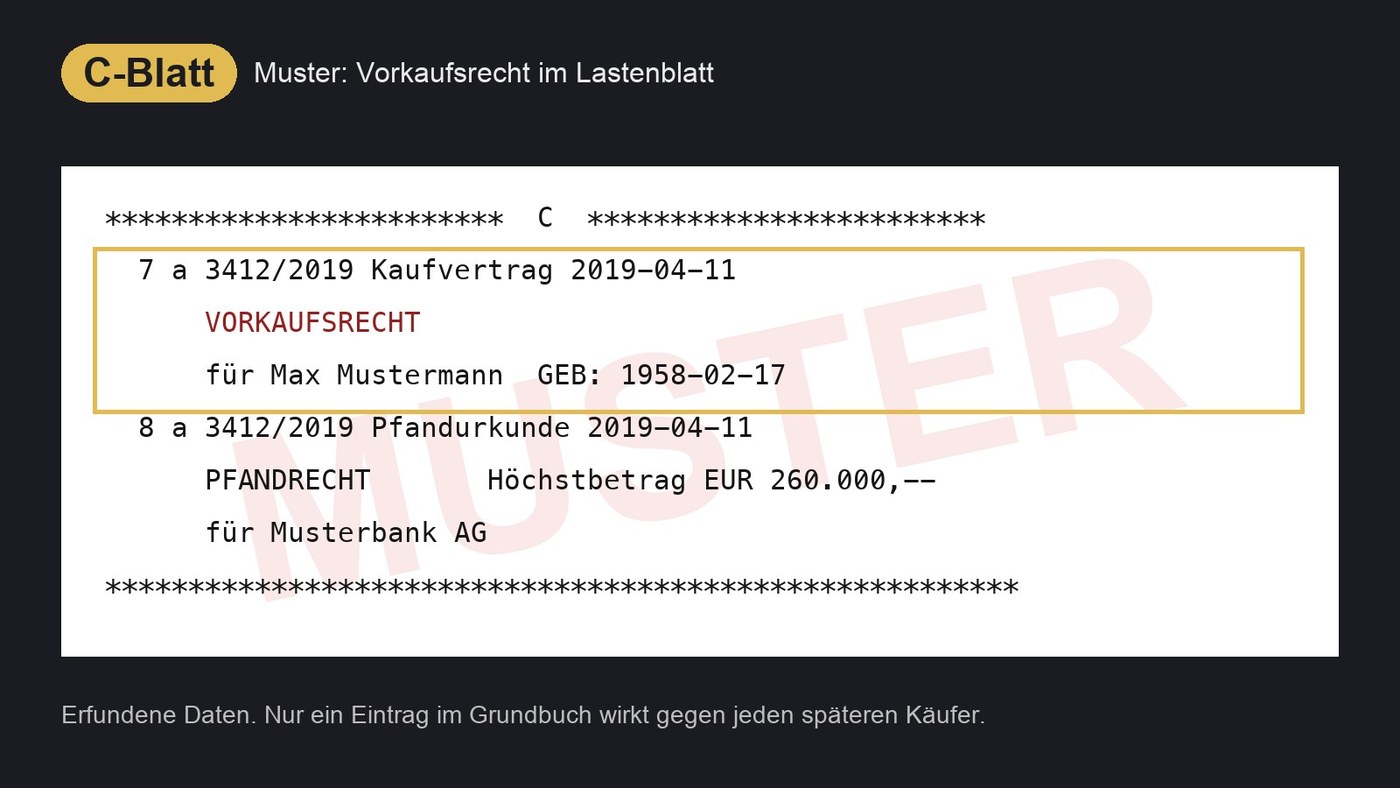
Whether your property has a right of first refusal on it is shown in the C sheet (C-Blatt) of the land register, the encumbrances sheet (Lastenblatt). How to get an extract and read the other sheets is explained in our guide to the land register extract.
Registered or not: the big difference
If the right of first refusal is in the land register, it applies to every later buyer. If it isn't registered, it only binds the two parties to the contract.
- Not registered: The right only binds the person who promised it. If it is ignored, the holder can only claim damages.
- Registered in the land register: The right binds every owner, including heirs and people who received the property as a gift. If it is ignored, the holder can demand the property from the new buyer.
- At a forced auction: A registered holder must be specifically invited.
For you as a seller, this means: you can't simply ignore a registered right of first refusal. A buyer who doesn't know about it risks losing the property again. That's why checking the C sheet is part of every sale.
When the right of first refusal applies and when it doesn't
It is only triggered by a purchase contract with someone else.
- Sale: Yes. As soon as you want to sell to a third party, you have to ask the holder first.
- Gift, inheritance, swap: No. The law clearly says that, without a separate agreement, the right of first refusal does not extend to other kinds of transfer. The Austrian Supreme Court (OGH) confirms this.
- Registered right after a gift or inheritance: It stays on the property as an encumbrance and passes to the new owner. If they sell later, it applies again.
- Death of the holder: The right ends. It can neither be inherited nor transferred to anyone else.
Inherited a property and want to sell? What else matters is covered in our guide selling an inherited property.
How it works: offer, wait 30 days, sell
For real estate, the holder has 30 days from the moment you offer them the property. After that, their right is gone for this sale.
The contract may also set a different deadline. That is allowed, so check carefully what was agreed in your case.
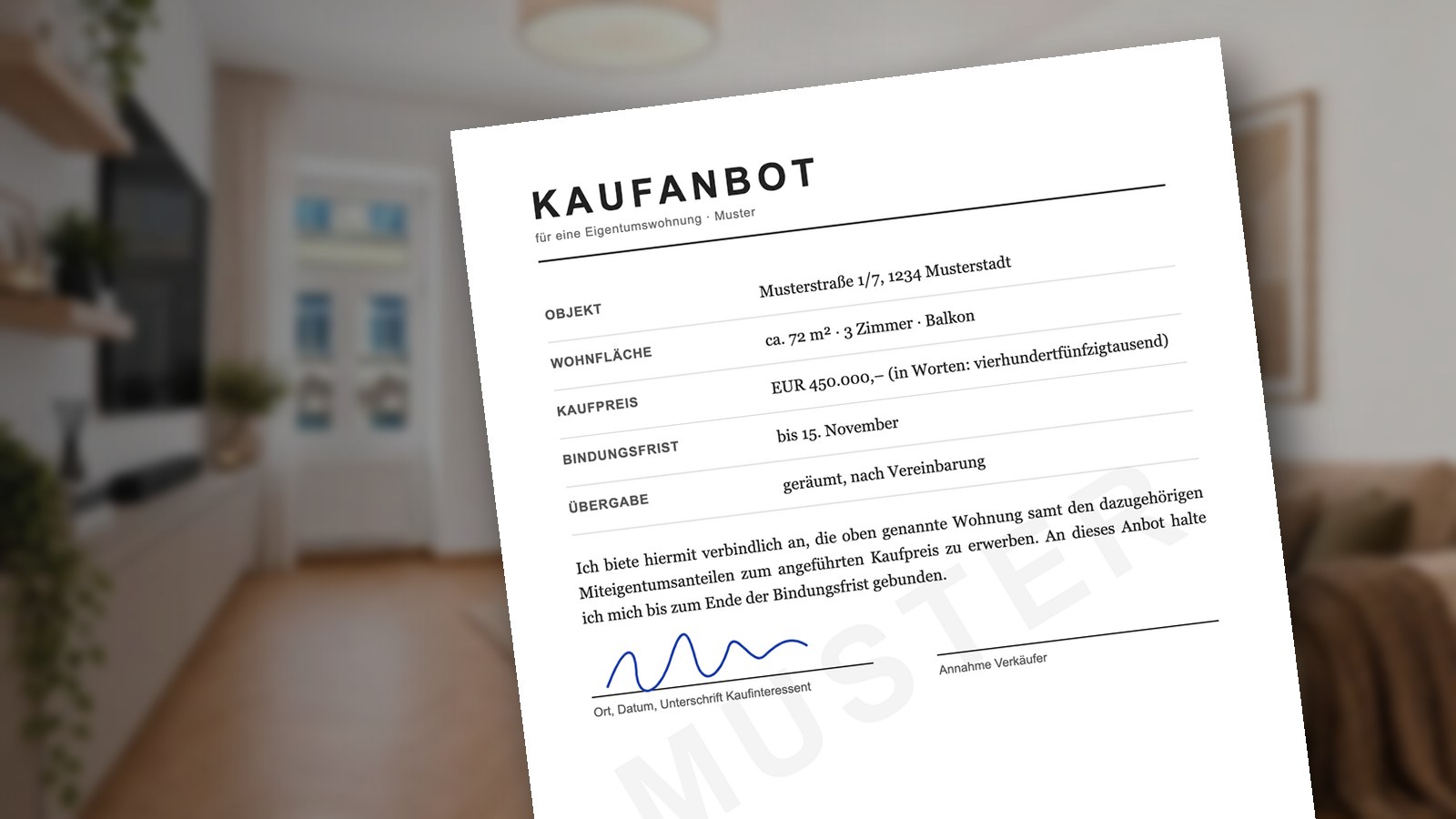
- 1. Find a buyer: Negotiate all terms with your prospective buyer, for example with a signed purchase offer (Kaufanbot).
- 2. Make a complete offer: Send the holder all the terms in writing and in a way you can prove, meaning price, payment, handover date and anything special.
- 3. Wait out the deadline: The holder buys, waives the right or lets the 30 days pass.
- 4. Sell: If the holder doesn't buy, you can sell to your prospective buyer, on exactly the terms you offered.
About the price: The holder must pay the full price your buyer offered. If your prospective buyer offers 400,000 euros, the holder may buy for exactly 400,000 euros, not 420,000 euros. If the buyer promised extra things the holder can't provide and that can't be made up for in money, the holder can't exercise the right of first refusal.
Removing a right of first refusal or getting a waiver
The easiest way is for the holder to waive it. With their consent, the right of first refusal is then also deleted from the land register.
- Waiver for this sale: The holder states in writing that they won't buy this time. Then you don't have to wait out the 30 days.
- Deletion for good: This requires the holder's consent to the deletion with a notarized signature and an application to the land register.
- After the holder's death: The right has ended but often still appears in the land register. It is then deleted on application to the land register. Your notary will tell you which documents are needed.
Which other documents you need for a sale is in our checklist for selling an apartment.

What does this mean for you as a seller?
A right of first refusal doesn't stop a sale. It just requires the right order and a little patience.
- Check the C sheet early: Ideally before you list. Then you know who you need to talk to.
- Plan for time: Allow for up to 30 extra days if the holder doesn't waive the right beforehand.
- Be open with buyers: Tell your prospective buyer right away that there is a right of first refusal. That builds trust.
- Protect the contract: Have the purchase contract drafted so that it only takes effect if the holder doesn't buy. Your notary or lawyer takes care of that.
Talk to the holder before you list. They are often willing to waive the right, and you can sell without waiting. When we sell in Vienna and Lower Austria, we handle all the coordination with you, the buyer and the notary. Start with a free valuation of your property.