Want to sell your apartment or house and buy something new at the same time? Then it all comes down to three questions: Which comes first? How do you bridge the gap? And which deadlines cost money if you miss them? Here's what really matters in Austria.
Sell first or buy first?
Route 1Sell first
You know exactly how much money you have and never pay twice. In return, you may need a short-term place to stay – or a late handover date.
Route 2Buy first
You grab your dream property right away. Until the sale proceeds arrive, you need bridge financing – and you carry the risk that the sale takes longer or brings in less.
Route 3Lined up
Both contracts are coordinated – usually with a later handover date: you sell first but keep living in your old home until you move. That often saves a temporary apartment and double costs, but it needs well-coordinated contracts.
Rule of thumb: the tighter the budget, the more it makes sense to sell first. If you have enough of a buffer and don't want to lose your dream property, you can buy first – but only with a realistic value for your old property, not a wish price.
Step 1: Know the real value – before you sign anything
Everything rests on one number: what will your old property really bring in? Work it out like this:
- Realistic sale price – based on real comparable sales, not online listings
- minus the outstanding loan, per the bank's current statement
- minus the costs of selling: agent's commission, possibly real estate income tax, deleting the mortgage
- = the money that actually goes into the new purchase
For bridge financing, the bank calculates conservatively anyway – usually not with the full market value. If you plan too optimistically here, you'll have a gap later.
Step 2: Understand bridge financing
Bridge financing (a bridge loan) is a short-term loan that covers the time until the sale proceeds come in. The old property serves as collateral for the bank. Often you only pay interest during the term and repay the full amount at the end with the sale proceeds. Each bank sets its own term and conditions.
Be sure to watch out for:
- A term with a buffer – plan for several months longer than you expect the sale to take
- What if the sale takes longer? Clarify in advance whether the bank will extend it or convert it into a regular loan
- Double costs – interest, service charges and possibly the old loan run in parallel for a while
- Financing fees – processing fee, appraisal and 1.2% for registering the mortgage
- An outstanding loan on the old property – with fixed-rate loans, an early repayment fee may apply: ask your bank first
Since Austria's strict lending rules (the KIM regulation) expired on June 30, 2025, each bank decides for itself – based on the Financial Market Authority's recommendations. That makes solutions more flexible, but also more varied. Comparing pays off.

Step 3: Connecting the sale and the purchase – the most common ways
To make the timing work, these are the main solutions in practice. They're often combined:
- A later handover date for the sale: you sell and receive the purchase price but keep living there for a few weeks or months – usually for an agreed usage fee. The contract should cover the move-out date, service charges and what happens if you move out late, such as an amount held back from the purchase price.
- A later payment for the purchase: for the new property, it's agreed that the purchase price is only due at a later date. That only works if the seller agrees. With a new-build apartment from a developer, you pay in installments as construction progresses anyway – which often buys time for your sale.
- Short bridge financing just for the gap: if it doesn't quite line up, a loan bridges only the few weeks or months in between. The shorter the gap, the lower the costs.
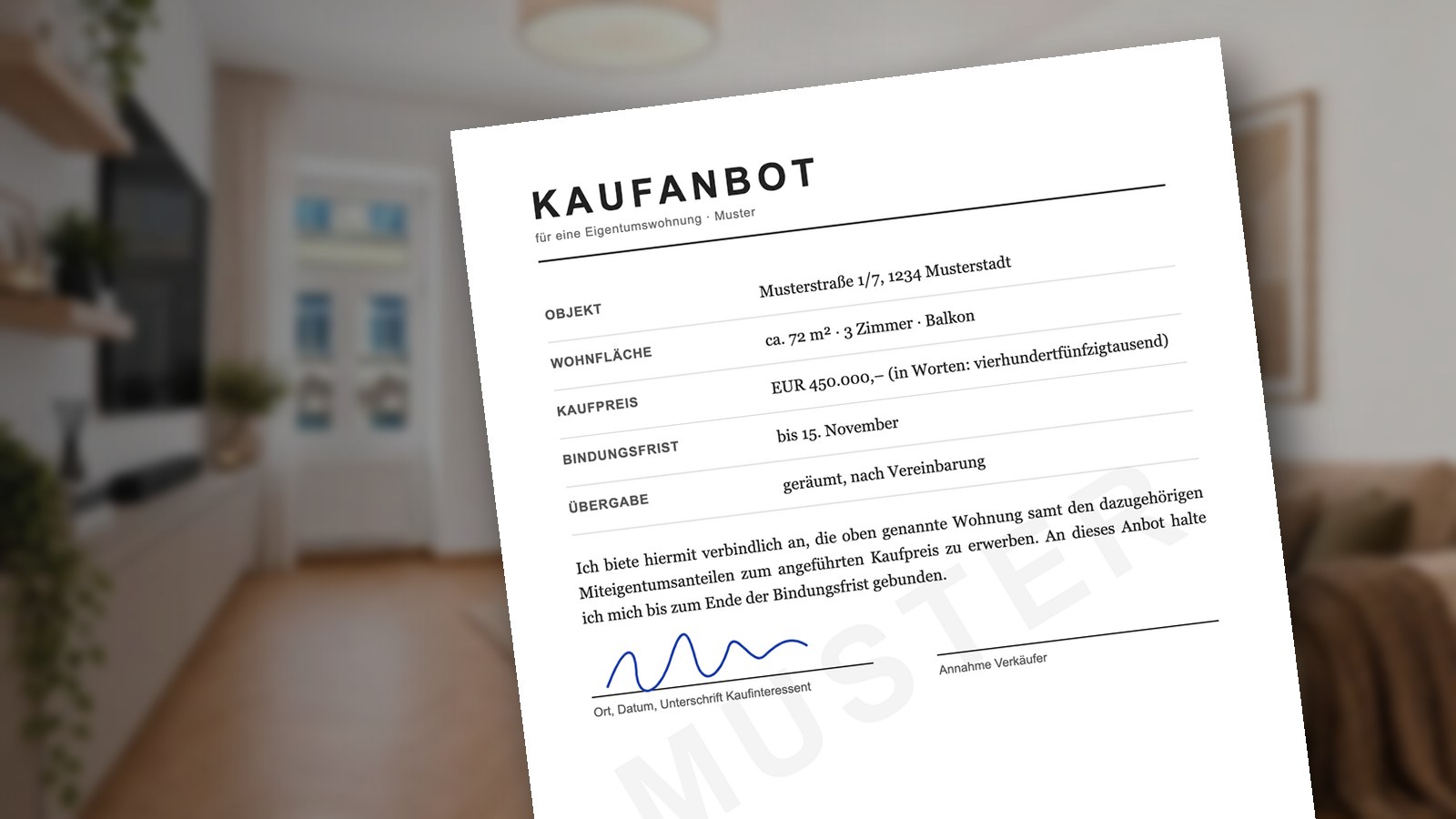
- A purchase offer with a condition: a purchase offer is binding. For the new purchase, a condition can help – such as a financing condition – but the seller has to accept it.
- One contract drafter for both contracts: a notary or lawyer handles the purchase price, loan payoff and land register through an escrow account. Ideally, the same office coordinates both contracts.
Important: don't sign anything binding without a written loan commitment – and make sure the dates for handover, payment and moving out match in both contracts.
Step 4: Keep the tax deadlines in mind
When you sell, 30% real estate income tax on the profit is generally due. There's an exemption for your main residence – if one of these rules is met:
Rule 12 years since buying
Your main residence for at least 2 continuous years since buying – up to the sale.
Rule 25 out of 10 years
Your main residence for at least 5 continuous years within the last 10 years before the sale.
And: you have to give up your main residence in the apartment you're selling. The tax authorities allow a little leeway here – for example, for moving around the time of the sale. But this is exactly where the costliest mistakes happen: under the 2-year rule, moving out too early or staying too long after the sale can cost you the exemption. So have your timeline checked by a notary or tax advisor before the sale.
Step 5: Fees for the new purchase – and a trap when selling
When you buy the new property, you'll pay 3.5% property transfer tax, 1.1% for the land register entry and 1.2% for registering the mortgage on your loan. The land register fee exemption for owner-occupied homes only applied to applications filed by July 1, 2026.
Watch out if you bought your old apartment with this exemption yourself: if you sell it within 5 years of registration or give up your main residence there, the fee becomes due after all. Build that into your budget from the start.
The checklist for your timeline
- Get a realistic market value for your old property
- Ask your bank about the outstanding loan and any early repayment fee
- Check the tax deadlines (main residence) with a notary or tax advisor
- If you bought with the fee exemption: check the 5-year period
- Get a loan commitment – only then make a binding offer
- Line up the handover dates of the sale and the purchase
- Plan a buffer for time and money
First the plan, then the signature. Start by getting an honest valuation of your property and checking the deadlines – then you'll know whether to sell first, buy first or do both at the same time. We coordinate the sale and handover so you don't pay twice. For bridge financing, we'll connect you with leading mortgage experts in Austria.
As of October 8, 2026. General information, not legal, tax or financing advice for individual cases.